Black Dog Blog
Your go-to source for holistic pet care tips.
Black Dog Blog
Welcome to the Black Dog Blog! Your go-to source for holistic pet care.
Is Free Feeding Your Dog Okay?
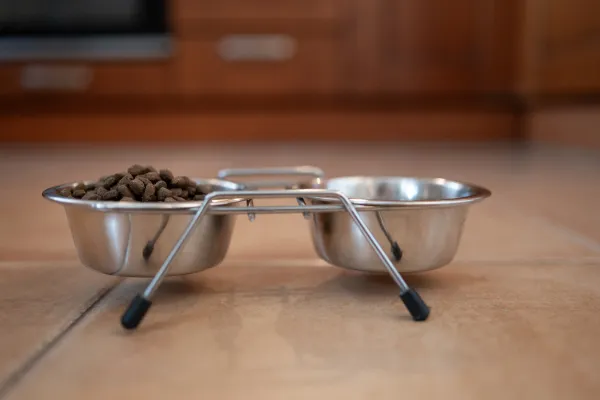
The bowl goes down. You walk away. Your dog eats a little, wanders off, comes back an hour later, eats a little more. No big deal, right?
Actually, this is one of the most common feeding habits we see that quietly causes problems over time.
Free feeding, leaving food out all day for your dog to graze, might feel like a relaxed and flexible approach. But for most dogs it leads to weight gain, finicky eating habits, and a real loss of appetite tracking.
And once those extra pounds creep on, they are tough to get back off. We have a whole post on helping your dog lose weight if you’re already there, but today let's talk about the feeding habits that get dogs into that situation in the first place.
In this guide we will cover what free feeding actually does to your dog, how to move to structured meals, and how slow feeders can make mealtime healthier and more fun.
Is Free Feeding Your Dog Okay?
Why Free Feeding Causes Problems
How Much Should Dogs Actually Eat?
What If Your Dog Inhales Their Food?
Slow Feeders: What They Are and Why They Work
Types of Slow Feeders Worth Knowing About
Slow Feeding, Structure, and Your Dog's Weight
What Is Free Feeding?
Free feeding means food is available to your dog at all times. The bowl stays full. Your dog decides when and how much to eat.
For some animals this works fine. Cats, for example, tend to self-regulate pretty well. Dogs? Not so much.
Most dogs will eat whenever food is available, whether they’re hungry or not. It is just instinct. And that instinct, combined with an always-full bowl, is a recipe for slow but steady weight gain.
Why Free Feeding Causes Problems
It is not just about calories. Free feeding creates a handful of problems that build on each other.
You lose track of how much your dog is actually eating.
Appetite is one of the first signs something is off with your dog's health. If you are not doing structured meals, you might not notice for days that your dog has slowed down on eating. That’s a missed signal.
It makes weight management nearly impossible.
If you don’t know how much is going in, it gets a little hard to make adjustments. This is one of the most common dog feeding mistakes we see, but luckily it’s also one of the easiest to fix!
It can create picky eaters.
When food is always available, it loses its value. Dogs start to pick and graze rather than eating a complete meal. Then owners start adding toppers or switching foods to get them interested, and suddenly mealtimes are a whole production.
It makes it harder to use food as a training reward.
A dog that’s been grazing all day is not motivated by food. Structure creates food drive, and food drive is your best friend during training.
How Much Should Dogs Actually Eat?
This depends on a few things: your dog's weight, age, activity level, and the type of food they are eating.
Most dog food packaging gives a range. Start there, but use it as a guide rather than a rule.
Watch your dog's body condition. You should be able to feel their ribs easily without pressing hard, but not see them. If you cannot feel them at all, that’s often a sign they’re getting too much.
Choosing the right food matters here too. Calorie density varies a lot between food types. Fresh food, raw, freeze-dried, and kibble all have very different calorie profiles.
We break down how to choose the best dog food in another post if you want to dig into that.
The Case for Structured Meals
Structured meals means feeding your dog at set times, usually twice a day, and picking up the bowl after 15 to 20 minutes whether they have finished or not.
It sounds simple. And it kind of is. But the results are real.
You know exactly how much your dog is eating
Appetite changes are immediately obvious
Meal times become an exciting part of the day (enrichment opportunity)
You have built-in training leverage
Weight management becomes manageable
The first few days of transitioning off free feeding can feel rough.
Your dog might act dramatic about it.
They’re not actually starving, they’re just adjusting to a new rhythm. Give it a week and most dogs settle right in.
What If Your Dog Inhales Their Food?
Once you move to structured meals, some dogs go from one extreme to the other.
Instead of grazing all day, they wolf down their food in 30 seconds flat. We covered this in detail in our post on dogs eating too fast, but the short version: eating too fast causes bloating, regurgitation, and digestive stress.
It’s a real problem, especially in large breeds.
The good news is there’s a really simple fix: slow feeders.
Slow Feeders: What They Are and Why They Work
Slow feeders are bowls, mats, or puzzle toys designed to make your dog work a little harder to get to their food.
Instead of inhaling a cup of kibble in seconds, your dog has to sniff, lick, push, and problem-solve their way through the meal.
The benefits go beyond just slowing them down.
Better digestion because the food is eaten at a healthier pace
Mental stimulation built right into mealtime
Reduced bloating risk
A more satisfying meal experience overall
For dogs transitioning off free feeding, slow feeders are especially helpful. They make mealtime feel like an event rather than something that’s over before it started.
Types of Slow Feeders Worth Knowing About
Slow Feeder Bowls
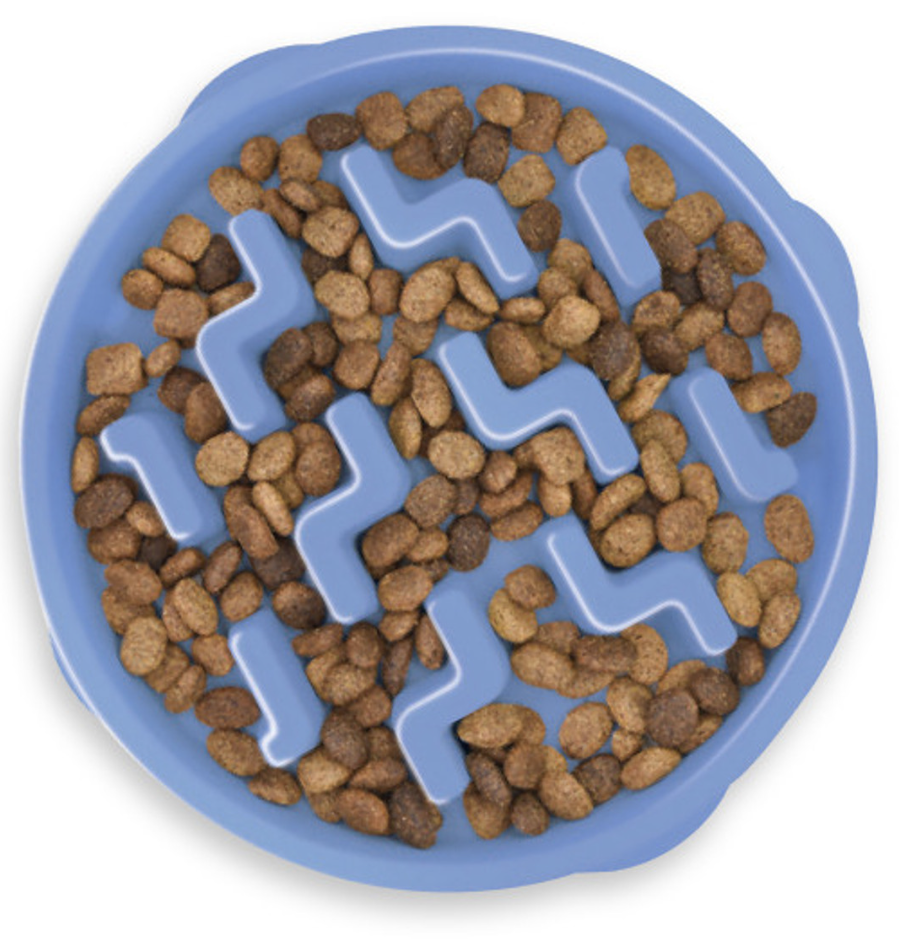
These are the most common option. They have raised ridges or maze-like patterns built into the bowl that make your dog work to get each bite. Great starting point for fast eaters.
Lick Mats
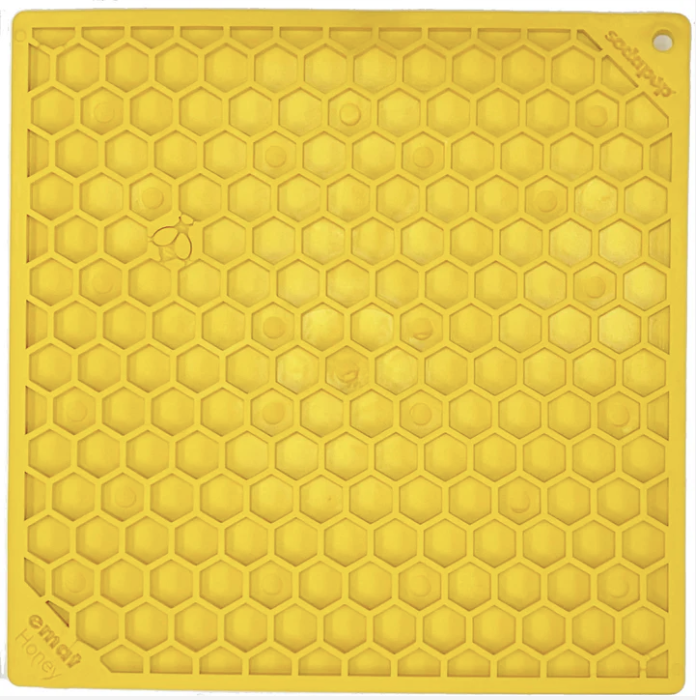
Flat textured mats where you spread wet food, bone broth, peanut butter, or a topper. Your dog licks their way through the meal. Licking is naturally calming for dogs, so lick mats double as a stress reliever.
Especially great during vet visits, thunderstorms, or anytime your dog needs to settle down.
Puzzle Feeders
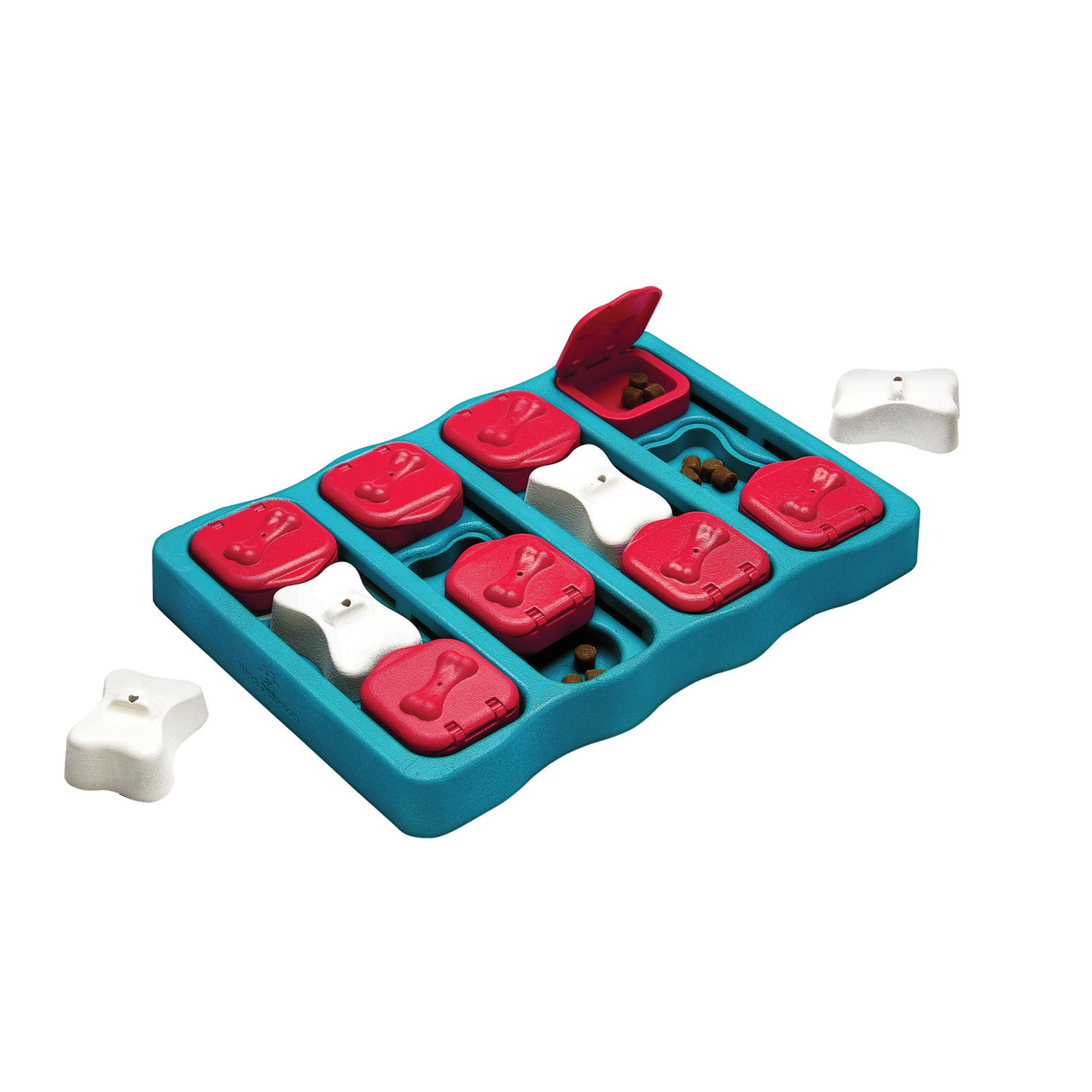
Image from Outward Hound
Puzzle feeders take enrichment up a notch. Your dog has to figure out how to access the food by sliding, flipping, or lifting pieces.
This is a fantastic option for mentally stimulating senior dogs or any dog that tends to get bored easily.
(Maybe don’t go from free feeding straight to puzzle feeders, though, you don’t want your dog to get frustrated.)
Snuffle Mats
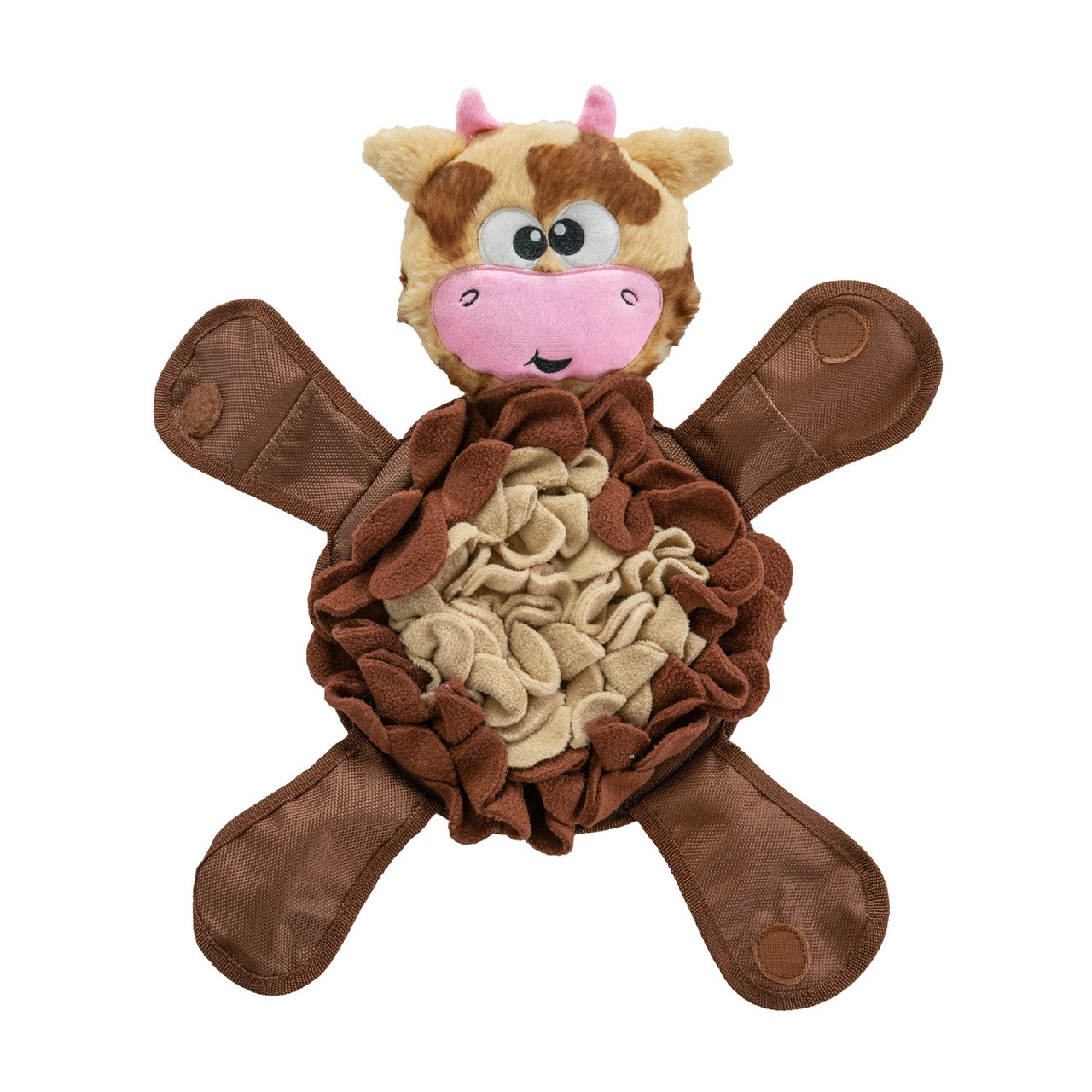
Image from Outward Hound
These are fabric mats with lots of folds and hiding spots where you can tuck dry food or treats. Your dog uses their nose to find the food, which engages their natural foraging instincts.
One of the more tiring feeding tools you can use, in the best possible way.
Toppl and Kong-Style Feeders
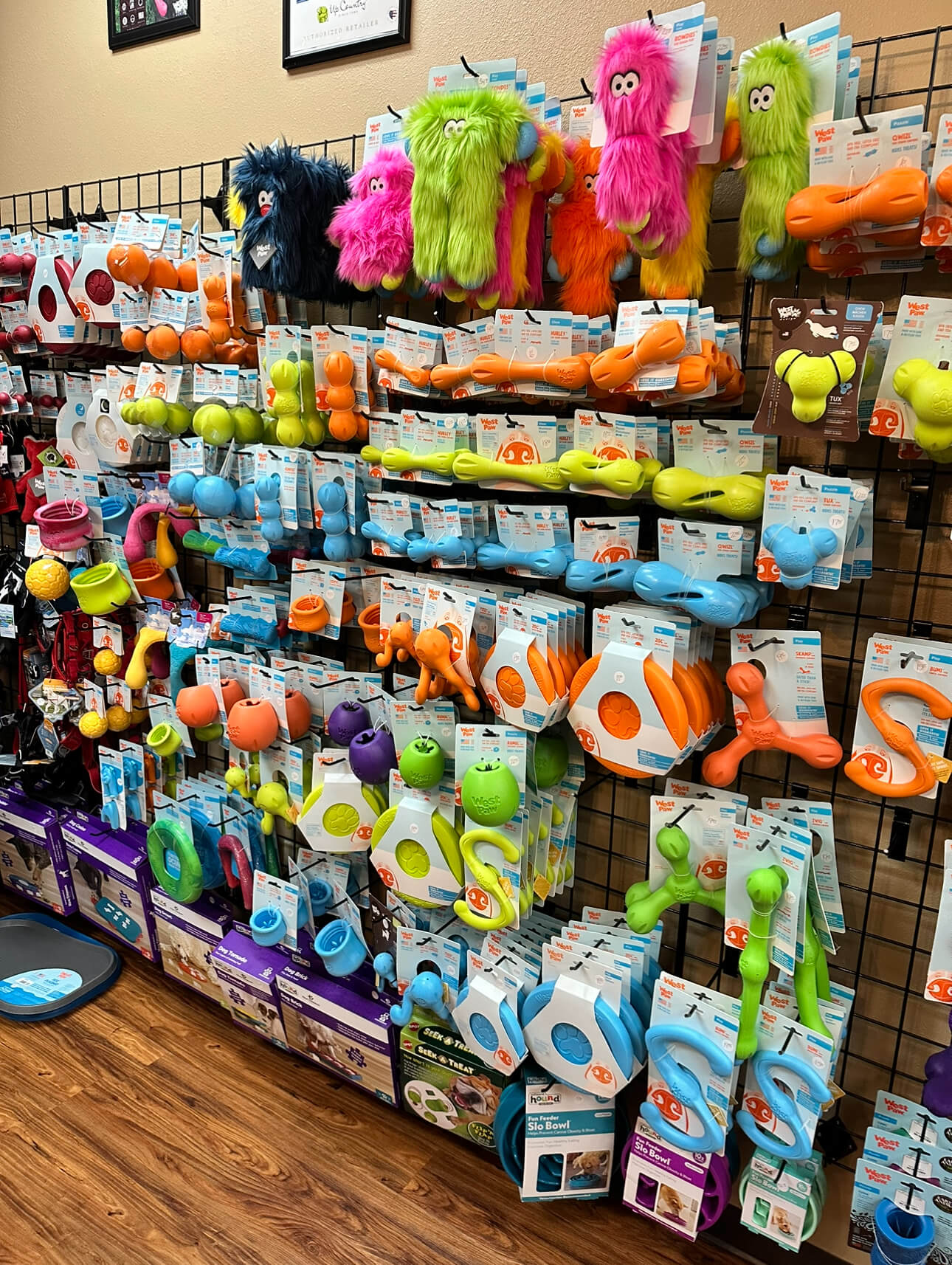
These are rubber toys you pack with food, wet food, raw food, or a mix. Your dog licks and chews to get to the meal. You can freeze them ahead of time to make it last even longer.
West Paw Toppls are one of our favorites at the Barkery.
Slow Feeding, Structure, and Your Dog's Weight
Slowing down meals and switching to structured feeding times does more than just prevent bloat. It genuinely helps with weight management.
When your dog eats more slowly, satiety signals have time to kick in. Dogs feel fuller from the same amount of food. That means you may not need to increase portion sizes even if your dog is acting hungry.
Combined with rotating proteins and choosing a high-quality food, structured meals with a slow feeder can make a real difference in keeping your dog at a healthy weight long term.
Finding Slow Feeders and Feeding Advice in Bristol, TN
We carry a range of slow feeders and puzzle feeders at Black Dog Barkery, including lick mats, snuffle mats, and West Paw Toppls. If you are not sure what would work best for your dog's size, eating style, or diet type, we are happy to help you figure it out.
We also talk about portion sizes and food types a lot. If your dog has been free fed for a while and you want to transition them to structured meals, come in and we can talk through what makes sense based on what they are eating.
Local pups around Bristol and the Tri-Cities deserve mealtimes that actually work for them. That’s something we feel pretty strongly about.
Small Changes at the Bowl Make a Big Difference
Free feeding feels easy in the moment. But it adds up. Weight creeps on, eating habits get unpredictable, and you lose a really useful health indicator.
Moving to structured meals and adding a slow feeder is one of the lowest-effort, highest-impact changes you can make for your dog's health. It does not have to be complicated.
Pick a bowl, set a schedule, and watch your dog actually enjoy mealtime instead of just grazing through it.
Stop by the Barkery and we can help you find a slow feeder that fits your dog perfectly.
Is Free Feeding Your Dog Okay?
The bowl goes down. You walk away. Your dog eats a little, wanders off, comes back an hour later, eats a little more. No big deal, right?
Actually, this is one of the most common feeding habits we see that quietly causes problems over time.
Free feeding, leaving food out all day for your dog to graze, might feel like a relaxed and flexible approach. But for most dogs it leads to weight gain, finicky eating habits, and a real loss of appetite tracking.
And once those extra pounds creep on, they are tough to get back off. We have a whole post on helping your dog lose weight if you’re already there, but today let's talk about the feeding habits that get dogs into that situation in the first place.
In this guide we will cover what free feeding actually does to your dog, how to move to structured meals, and how slow feeders can make mealtime healthier and more fun.
Is Free Feeding Your Dog Okay?
Why Free Feeding Causes Problems
How Much Should Dogs Actually Eat?
What If Your Dog Inhales Their Food?
Slow Feeders: What They Are and Why They Work
Types of Slow Feeders Worth Knowing About
Slow Feeding, Structure, and Your Dog's Weight
What Is Free Feeding?
Free feeding means food is available to your dog at all times. The bowl stays full. Your dog decides when and how much to eat.
For some animals this works fine. Cats, for example, tend to self-regulate pretty well. Dogs? Not so much.
Most dogs will eat whenever food is available, whether they’re hungry or not. It is just instinct. And that instinct, combined with an always-full bowl, is a recipe for slow but steady weight gain.
Why Free Feeding Causes Problems
It is not just about calories. Free feeding creates a handful of problems that build on each other.
You lose track of how much your dog is actually eating.
Appetite is one of the first signs something is off with your dog's health. If you are not doing structured meals, you might not notice for days that your dog has slowed down on eating. That’s a missed signal.
It makes weight management nearly impossible.
If you don’t know how much is going in, it gets a little hard to make adjustments. This is one of the most common dog feeding mistakes we see, but luckily it’s also one of the easiest to fix!
It can create picky eaters.
When food is always available, it loses its value. Dogs start to pick and graze rather than eating a complete meal. Then owners start adding toppers or switching foods to get them interested, and suddenly mealtimes are a whole production.
It makes it harder to use food as a training reward.
A dog that’s been grazing all day is not motivated by food. Structure creates food drive, and food drive is your best friend during training.
How Much Should Dogs Actually Eat?
This depends on a few things: your dog's weight, age, activity level, and the type of food they are eating.
Most dog food packaging gives a range. Start there, but use it as a guide rather than a rule.
Watch your dog's body condition. You should be able to feel their ribs easily without pressing hard, but not see them. If you cannot feel them at all, that’s often a sign they’re getting too much.
Choosing the right food matters here too. Calorie density varies a lot between food types. Fresh food, raw, freeze-dried, and kibble all have very different calorie profiles.
We break down how to choose the best dog food in another post if you want to dig into that.
The Case for Structured Meals
Structured meals means feeding your dog at set times, usually twice a day, and picking up the bowl after 15 to 20 minutes whether they have finished or not.
It sounds simple. And it kind of is. But the results are real.
You know exactly how much your dog is eating
Appetite changes are immediately obvious
Meal times become an exciting part of the day (enrichment opportunity)
You have built-in training leverage
Weight management becomes manageable
The first few days of transitioning off free feeding can feel rough.
Your dog might act dramatic about it.
They’re not actually starving, they’re just adjusting to a new rhythm. Give it a week and most dogs settle right in.
What If Your Dog Inhales Their Food?
Once you move to structured meals, some dogs go from one extreme to the other.
Instead of grazing all day, they wolf down their food in 30 seconds flat. We covered this in detail in our post on dogs eating too fast, but the short version: eating too fast causes bloating, regurgitation, and digestive stress.
It’s a real problem, especially in large breeds.
The good news is there’s a really simple fix: slow feeders.
Slow Feeders: What They Are and Why They Work
Slow feeders are bowls, mats, or puzzle toys designed to make your dog work a little harder to get to their food.
Instead of inhaling a cup of kibble in seconds, your dog has to sniff, lick, push, and problem-solve their way through the meal.
The benefits go beyond just slowing them down.
Better digestion because the food is eaten at a healthier pace
Mental stimulation built right into mealtime
Reduced bloating risk
A more satisfying meal experience overall
For dogs transitioning off free feeding, slow feeders are especially helpful. They make mealtime feel like an event rather than something that’s over before it started.
Types of Slow Feeders Worth Knowing About
Slow Feeder Bowls
These are the most common option. They have raised ridges or maze-like patterns built into the bowl that make your dog work to get each bite. Great starting point for fast eaters.
Lick Mats
Flat textured mats where you spread wet food, bone broth, peanut butter, or a topper. Your dog licks their way through the meal. Licking is naturally calming for dogs, so lick mats double as a stress reliever.
Especially great during vet visits, thunderstorms, or anytime your dog needs to settle down.
Puzzle Feeders
Image from Outward Hound
Puzzle feeders take enrichment up a notch. Your dog has to figure out how to access the food by sliding, flipping, or lifting pieces.
This is a fantastic option for mentally stimulating senior dogs or any dog that tends to get bored easily.
(Maybe don’t go from free feeding straight to puzzle feeders, though, you don’t want your dog to get frustrated.)
Snuffle Mats
Image from Outward Hound
These are fabric mats with lots of folds and hiding spots where you can tuck dry food or treats. Your dog uses their nose to find the food, which engages their natural foraging instincts.
One of the more tiring feeding tools you can use, in the best possible way.
Toppl and Kong-Style Feeders
These are rubber toys you pack with food, wet food, raw food, or a mix. Your dog licks and chews to get to the meal. You can freeze them ahead of time to make it last even longer.
West Paw Toppls are one of our favorites at the Barkery.
Slow Feeding, Structure, and Your Dog's Weight
Slowing down meals and switching to structured feeding times does more than just prevent bloat. It genuinely helps with weight management.
When your dog eats more slowly, satiety signals have time to kick in. Dogs feel fuller from the same amount of food. That means you may not need to increase portion sizes even if your dog is acting hungry.
Combined with rotating proteins and choosing a high-quality food, structured meals with a slow feeder can make a real difference in keeping your dog at a healthy weight long term.
Finding Slow Feeders and Feeding Advice in Bristol, TN
We carry a range of slow feeders and puzzle feeders at Black Dog Barkery, including lick mats, snuffle mats, and West Paw Toppls. If you are not sure what would work best for your dog's size, eating style, or diet type, we are happy to help you figure it out.
We also talk about portion sizes and food types a lot. If your dog has been free fed for a while and you want to transition them to structured meals, come in and we can talk through what makes sense based on what they are eating.
Local pups around Bristol and the Tri-Cities deserve mealtimes that actually work for them. That’s something we feel pretty strongly about.
Small Changes at the Bowl Make a Big Difference
Free feeding feels easy in the moment. But it adds up. Weight creeps on, eating habits get unpredictable, and you lose a really useful health indicator.
Moving to structured meals and adding a slow feeder is one of the lowest-effort, highest-impact changes you can make for your dog's health. It does not have to be complicated.
Pick a bowl, set a schedule, and watch your dog actually enjoy mealtime instead of just grazing through it.
Stop by the Barkery and we can help you find a slow feeder that fits your dog perfectly.
Copyright Black Dog Barkery 2026 | Terms | Privacy Policy
Website built by Passive Profits Group
Get In Touch
Store Hours:
Wednesday - 11:00 AM - 6:00 PM
Thursday - 11:00 AM - 6:00 PM
Friday - 11:00 AM - 6:00 PM
Saturday - 10:00 AM - 3:00 PM
Sunday - Tuesday - CLOSED
Copyright Black Dog Barkery 2026 | Terms | Privacy Policy